
Why End-to-End Engineering Wins for Industrial Facilities
Posted on: 16/07/2026 Read time: 7 minutes
End-to-end engineering means working with one engineering partner across every stage of an industrial project: design, manufacture, installation, calibration, training, and ongoing service.
If you’re managing an industrial facility in Australia, you’ll know how often that work gets split across a panel of separate suppliers instead. That fragmentation is the difference between a project that lands on schedule and one that gets lost between contractors, particularly for Australian mining and heavy industry operators.
At Leussink, we’ve spent more than 40 years building an end-to-end alternative to disjointed industrial engineering services, supporting facilities across Australia and New Zealand with a single, dedicated engineering team instead of a patchwork of contractors.
Key Takeaways
- One engineering partner across the whole project lifecycle, not a chain of separate suppliers
- Mining and heavy industry have the most to gain, since that’s where fragmented vendors drive the highest downtime and coordination cost.
- A true end-to-end provider handles design, machining, fabrication, metrology, installation, training and ongoing service in-house.
- The right partner feels like an extension of your engineering team rather than a transactional supplier.
What Does End-to-End Engineering Mean for Industrial Facilities?
End-to-end engineering means one team holds everything from the start of your project: the original design intent, manufacturing tolerances, calibration records, installation notes, training materials, and service history. If a tolerance question comes up two years after delivery, the answer is already on file. If a critical component fails, the engineers building the replacement are the same ones who built the original.
That continuity is the practical difference between a one-off project and an ongoing partnership, and it’s the gap most heavy industry facilities live with when their engineering work is split across multiple suppliers.
The Real Cost of a Fragmented Engineering Supply Chain
Splitting industrial engineering services across multiple suppliers can sometimes look like the cheaper option on the quote sheet. The real cost shows up later in the gaps between them. Each handover between vendors introduces interpretation risk, scheduling friction, and accountability gaps. When a fabricated assembly comes in out of tolerance, the designer points to the machinist, the machinist points to the inspection report, and the operator absorbs the downtime.
If you’re currently evaluating outsourced engineering services, the choice is rarely about the lowest quote. It’s about who carries the risk when something doesn’t quite fit. End-to-end engineering removes that overhead by putting design, manufacture, installation and service under one roof.
The research backs this up. A 2026 Western Sydney University review of Australian industrial project economics found that integrated, single-provider delivery can reduce total project costs by up to 25%. Where projects are split across multiple contractors, that saving is absorbed by duplicated compliance work, misaligned timelines, and the higher-risk pricing that clients and insurers apply when accountability is spread thin. Set the two models against each other, and the contrast becomes concrete.
Comparison: Fragmented Supplier Model vs End-to-End Engineering Partnership
| Dimension | Fragmented model | End-to-end partnership |
| Accountability | Distributed across vendors; gaps at every interface | Single point of contact for the full lifecycle |
| Breakdown response | Procurement cycle restarts; sourcing delays | Begins from existing drawings, files and history |
| Equipment knowledge | Lives with each vendor; lost at handover | Accumulates with one partner across years of collaboration |
| Quality assurance | Per-vendor systems and standards | Single integrated QA system end-to-end |
| Cost profile | Lower per-quote, higher total cost | Higher coordination value, lower TCO |
| Project velocity | Bottlenecks at every handover | Continuous coordinated workflow |
| Risk profile | Interface and rework risk concentrated on operator | Risk shared and reduced through ownership |
Six Benefits of an End-to-End Engineering Partner for Heavy Industry
Single point of accountability across the lifecycle
A single contract covers design, manufacture, and service, so there’s no gap between the team that designs the equipment and the team that builds it.
Faster breakdown response and recovery
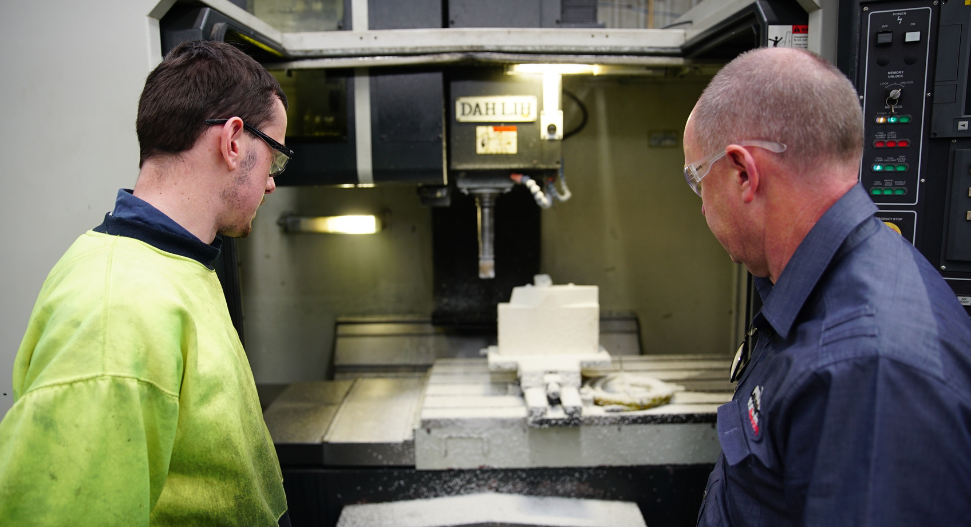
When the partner already holds the original drawings, machining files, and inspection records, recovery from an equipment breakdown begins in hours rather than days. This is where good engineering support services pay for themselves.
Lower total cost of ownership
Integrated design, manufacture, and service save money in the long run. With fewer handovers, there’s less rework, fewer duplicated tasks, and lower risk pricing.
Tailored solutions, not off-the-shelf compromises
When the team knows your facility inside and out, they can build bespoke engineering solutions for your exact requirements, instead of forcing a standard part to fit a non-standard problem.
Continuity of equipment knowledge
Every drawing, tolerance, calibration record and service note sits in one place. When something needs checking years down the line, the answer is already there.
Operator and maintenance training transfer
The team that built your equipment trains your team on it. Between service visits, your operators know what to look for and what to fix themselves.
The Leussink Approach: Collaborative, Integrated, Built Around Your Facility
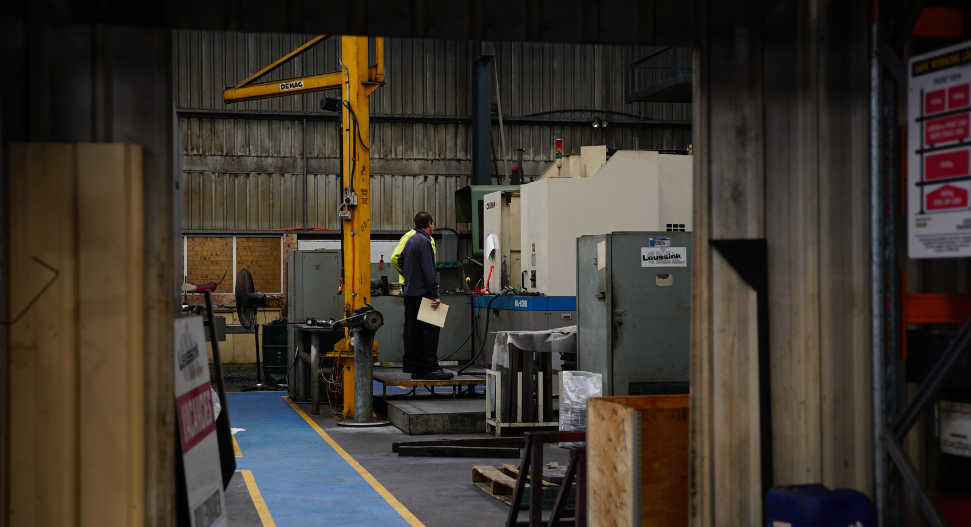
At Leussink, we work as your end-to-end engineering partner from our Illawarra workshop, delivering heavy engineering services across design, manufacture, metrology and ongoing support.
We’re a second-generation family business with more than 40 years behind us, and we treat every project as a long-term relationship: on-site scoping before quoting, regular reviews after handover, and a willingness to take on the engineering problems other suppliers won’t.
Leussink’s in-house capabilities include:
- Precision machining – CNC, tight-tolerance components, short to high-volume production runs
- Metal fabrication and welding – structural assemblies, custom builds, welding services
- In-house and on-site metrology – Tomelleri portable arms, inspection, and reverse engineering
- Bespoke mechanical design and manufacturing drawings – custom equipment design and production-ready drawings
- Equipment breakdown response and rapid on-site repair
- Foundry capability – Omega Sinto machinery for casting and pattern solutions
- Demmeler welding system – Australia’s exclusive provider, sales and rental
- Ongoing servicing, operator training and scheduled client performance reviews
With every capability under our control, we can deliver complex industrial engineering services without relying on third-party contractors. Get in touch to see how we can help with your next engineering project.
From Consultation to Ongoing Support: The End-to-End Workflow
Leussink’s end-to-end engineering follows a five-stage workflow that progresses from problem definition through to long-term partnership.
Consultation and quoting
We visit your facility, understand the work that needs doing, and put together a properly scoped proposal.
Design and manufacture
Mechanical design, drawings, precision machining, and metal fabrication all run through one coordinated workflow, with metrology checks at every key stage.
On-site installation and calibration
Our team installs and calibrates the equipment on-site, including any reverse engineering needed to fit with your existing plant.
Operator and maintenance training
We train your in-house team on how to operate the equipment, handle routine maintenance, and spot the signs that mean it’s time to call us back.
Ongoing service and review
Once the equipment is in service, we schedule regular performance reviews to make sure it’s still performing to spec, with rapid breakdown response available between reviews.
Why End-to-End Industrial Engineering Services Matter Most in Mining and Resources
Supplier fragmentation hits mining and resources operators harder than anywhere else in the Australian industry. A single hour of unplanned downtime on a primary processing circuit can cost more than a full annual service contract, and remote sites add logistics distance to the problem. That’s why mining engineering services and mining maintenance services pay off most when they sit with one accountable partner.
When a critical component fails, an end-to-end engineering partner cuts response time at every step. We already hold the drawings, so a replacement can be manufactured under the original tolerances. Our service team is on the road before a fragmented supplier panel would have worked out who’s responsible. On-site metrology verifies the repair before you return the asset to production.
Book a Consultation with the Leussink Engineering Team
End-to-end engineering begins with a consultation. We’ll come to your facility, see what you’re working with, and put together a proposal that reflects the real scope of the work.
Frequently Asked Questions
What is the difference between end-to-end engineering, turnkey engineering services and a one-stop-shop?
How does end-to-end engineering reduce downtime in mining and heavy industry?
How do I evaluate an end-to-end engineering provider?
Does Leussink provide end-to-end engineering on-site across Australia and New Zealand?
Other News
Small Parts Machining: Why Leussink Takes On the Small Jobs Too
Written by Stuart Ward, Sales and Marketing Manager at Leussink...
Written by Stuart Ward,...
Leussink Joins Omega Sinto Foundry Machinery at AFI 2026
Leussink will be at AFI 2026, the Australian Foundry Institute's...
Leussink will be at...

In-House vs Outsourced CNC Machining
In-House vs Outsourced CNC Machining: How to Make the Right...
In-House vs Outsourced CNC...
Casting CNC Machining
Why Casting CNC Machining Is Essential for Australian Foundries Precision...
Why Casting CNC Machining...
Why End-to-End Engineering Wins for Industrial Facilities
End-to-end engineering means working with one engineering partner across every...
End-to-end engineering means working...
CNC Machining vs Manual Machining for Heavy Industry: When Each Method Wins
Quick Answer: CNC machining vs manual machining is a project-by-project...
Quick Answer: CNC machining...
Emergency CNC Machining: What Actually Happens When Critical Equipment Fails?
It’s 2am. A bearing on the main drive has failed,...
It’s 2am. A bearing...
7 Australian Foundry Production Problems (And How Engineering Support Solves Them)
Most Australian foundries don't lose performance overnight. They lose it...
Most Australian foundries don't...
What Makes CNC Machining Essential for Heavy Industry Applications in Australia?
When a critical component fails in a mining operation or...
When a critical component...
How Does Large-Scale CNC Machining Handle Complex Component Production?
Large-scale CNC machining is not simply conventional CNC applied to...
Large-scale CNC machining is...