
What Makes CNC Machining Essential for Heavy Industry Applications in Australia?
Posted on: 02/07/2026 Read time: 8 minutes
When a critical component fails in a mining operation or steel processing plant, the cost isn’t just the part. It’s the downtime, the chain reaction through production, and the time it takes to find a supplier who can actually solve the problem, not just quote it.
That’s the reality that shapes demand for industrial CNC machining in Australia. Across sectors where equipment runs hard, tolerances are tight, and replacement windows are short, CNC machining has become a non-negotiable capability rather than a nice-to-have upgrade.
This guide covers how CNC machining supports the specific demands of heavy industry, and what to look for when evaluating a supplier.
Why Heavy Industry Places Unique Demands on CNC Machining
Most industries need precision. Heavy industry needs precision under conditions that would compromise lesser components — continuous load, abrasive environments, thermal stress, and assemblies where a few microns of misalignment can cascade into equipment failure.
This creates a specific set of requirements that standard machining approaches struggle to meet consistently:
- Components are often large, complex, or both — requiring multi-axis machining and the capacity to handle significant material volumes without sacrificing accuracy.
- Materials like hardened steel, stainless steel, and specialist alloys demand tooling capability and operator expertise, not just machine horsepower.
- Repeatability matters — in high-volume applications, every part must meet the same specification, not just the first one off the machine.
- Downtime costs are high, which means turnaround speed and supply reliability are as important as technical precision.
CNC industrial machinery addresses all of these — but not all CNC suppliers are equipped to handle the scale and complexity that heavy industry demands.
Core Advantages of CNC Machining for Heavy Industry
Precision at Scale
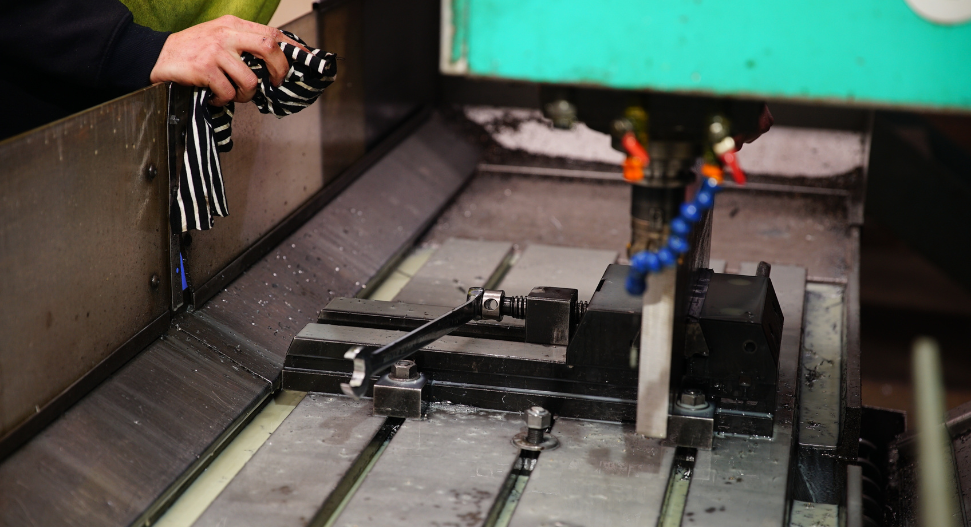
High-tolerance machining is the baseline requirement in sectors such as defence and steel processing, where component failure has serious downstream consequences. CNC machining delivers micron-level accuracy consistently, even on oversized components where manual methods introduce compounding errors across the workpiece.
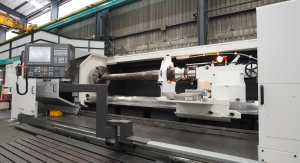
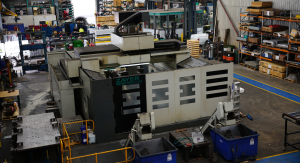
For large-scale CNC machining, this is particularly significant. Maintaining tight tolerances across a large surface area or complex geometry requires both machine capability and programming expertise. Leussink’s Okuma LH55-N-Cx4000 lathes provide the capacity and control precision for exactly this type of work.
Repeatability for High-Volume Production
Once a program is validated, CNC systems reproduce identical parts with no drift between runs. For industries like defence manufacturing — where components must meet compliance specifications consistently — this isn’t just a quality advantage. It’s a contractual requirement.
Material Versatility
Heavy industry components are rarely made from mild steel. CNC machining supports a wide range of industrial materials, including:
- Stainless steel
- High-strength alloys
- Aluminium
- Copper
- Engineering plastics and composites
CNC machining of stainless steel is particularly common in food processing, energy, and chemical processing environments, where corrosion resistance and dimensional accuracy must coexist.
Reduced Lifecycle Costs
Precision-machined components wear more evenly, align correctly on assembly, and last longer under load. In heavy industry environments, this translates directly into fewer maintenance intervals and lower total cost of ownership, which is often a more compelling argument for CNC investment than the upfront unit cost.
Which Heavy Industries Does CNC Machining Support?
Mining Industry
Mining equipment operates in some of the harshest conditions in Australian industry — abrasive materials, remote locations, and continuous operation schedules that leave little room for unplanned maintenance.
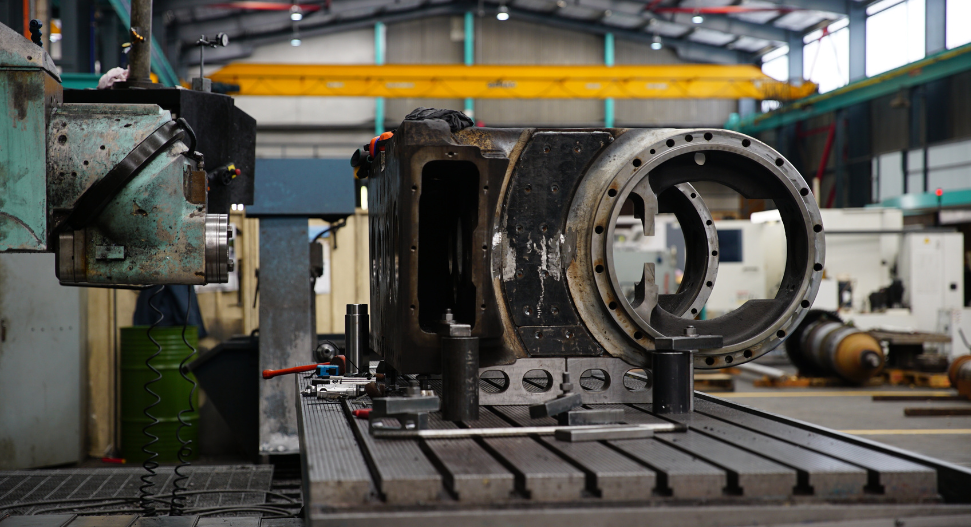
CNC machining for the mining industry addresses two distinct needs: the production of new components to tight specifications, and the rapid turnaround of replacement and repair parts when equipment breaks down.
The second of these is often underappreciated. When a critical component fails at a remote site, getting a like-for-like replacement isn’t always straightforward — particularly for older equipment where original parts are no longer in production. Leussink’s reverse engineering capability means we can reconstruct failed parts from physical samples or drawings, reproduce them to improved tolerances, and deliver components that often outlast the original.
Steel and Metal Processing
Steel mills place extraordinary demands on equipment. High operating temperatures, continuous processing cycles, and large structural loads mean that every component in the production line must be engineered for optimal performance.
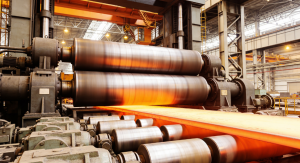
CNC for steel industry applications at Leussink includes the production of large, high-load components for rolling mills and processing equipment, as well as mill stand refurbishment and on-site machining support. The combination of heavy-duty CNC machinery and in-house fabrication and welding capability means complex assemblies can be produced and finished under one roof — reducing lead times and supplier coordination overhead.
Defence
CNC machining of defence components operates under a different standard than most commercial applications. Tolerances are tighter, documentation requirements are more rigorous, and there is no margin for a component that “mostly” meets spec.
Leussink has been advancing its defence sector capability alongside investments in its Okuma machine fleet, with the precision and repeatability of CNC machining providing a strong foundation for compliance-critical production runs. Our facility holds certification to Australian and international standards, supporting the requirements of defence procurement processes.
Energy and Industrial Equipment
Turbines, pumps, compressor components, and power transmission equipment all share a common characteristic: they run continuously, and failure is expensive. CNC machines for heavy industry in the energy sector need to produce components that maintain their dimensional integrity under thermal and mechanical stress over extended operating cycles.
Leussink’s engineering work in the energy sector spans both new component production and repair and rework — including components where extended lead times from OEM suppliers are not an option. Our 24/7 breakdown service and in-house machining capability mean that urgent requirements can be addressed without waiting for overseas supply chains.
Large-Scale CNC Machining: Handling Size Without Sacrificing Accuracy
Many CNC suppliers can produce precision parts. Fewer can do so at the dimensions and weights that heavy industry regularly demands.
Large-scale CNC applications introduce challenges that don’t exist at smaller scales: workpiece rigidity, toolpath planning across extended surfaces, thermal expansion during machining, and maintaining consistent tolerances when the component itself is large enough that standard fixturing approaches don’t apply.
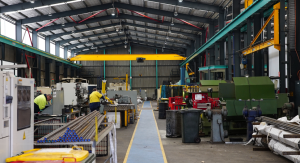
Leussink’s facility and machine capacity support the production of oversized components for mining, steel, and heavy equipment applications. This means customers don’t need to split large components into sub-assemblies to accommodate a supplier’s capacity limits — a common workaround that introduces alignment tolerances and additional joining risk.
Where a component is genuinely too large for in-shop machining, Leussink’s portable metrology and on-site machining capabilities provide an alternative that many fixed-facility suppliers cannot match.
Beyond Machining: The Value of End-to-End Engineering Support
A CNC machining supplier and a CNC machining partner are different things. The distinction matters most in heavy industry, where the problem rarely starts with “I need this part made to drawing.”
More often, the brief is more complex: a component has failed, and there’s no drawing. A part is wearing out faster than expected, and the tolerance needs to be revisited. A new application requires a component that doesn’t yet exist in a producible form.
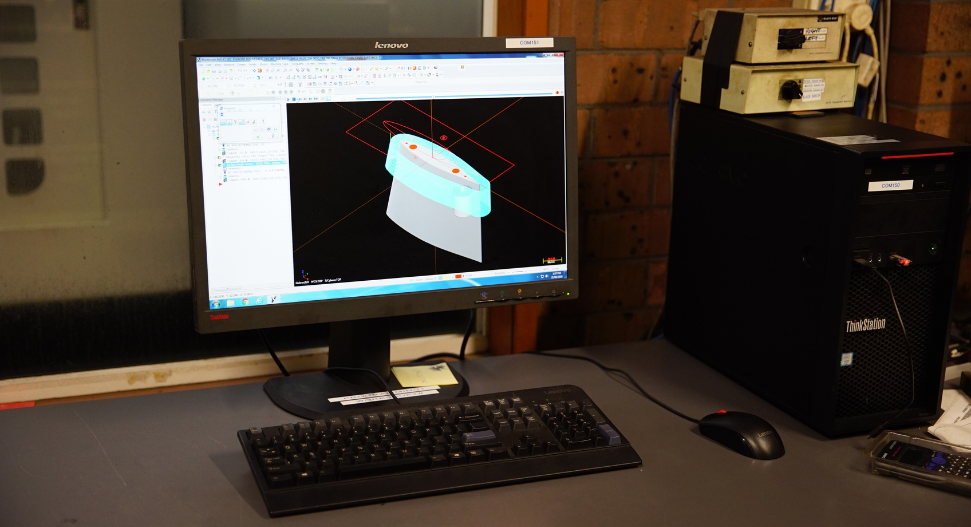
Leussink’s engineering capability spans the full development arc — from initial design and CAD/CAM programming through to precision machining, fabrication, assembly, quality verification, and after-sales support. This means the same team that understands your application is responsible for machining the component to meet it.
For clients managing large or ongoing production requirements, Leussink also plans and manages spare parts availability, ensuring critical components are on hand before failure, rather than ordered after it.
Choosing the Right Heavy Industry CNC Machining Partner in Australia
For heavy industry businesses shortlisting industrial CNC machining suppliers in Australia, capability claims are common. What separates credible suppliers from capable-sounding ones usually comes down to three things:
Proven experience at the relevant scale. Not CNC machining generally — CNC machining at the size, complexity, and material specification your application requires. Ask for examples.
Integrated capability. Suppliers who can only machine components, not design, fabricate, verify, or support them, introduce coordination overhead and accountability gaps. The fewer handoffs in the production chain, the more control over quality and lead time.
Responsiveness. In heavy industry, lead time and breakdown response matter as much as technical precision. A supplier whose engineering team you can reach when something goes wrong is worth considerably more than one that offers a lower unit price.
Leussink has operated from our Illawarra facility for over 40 years, serving clients across mining, steel, defence, energy, and construction. We’re a family-owned business, which means decisions are made by engineers, not account managers.
Frequently Asked Questions
Why is CNC Machining Important in Heavy Industry?
Can CNC Machining Handle Large-Scale Components?
Is CNC Machining Suitable for Stainless Steel and Heavy Materials?
What is High-Tolerance Machining and When is it Required?
What Industries Rely Most on CNC Machining in Australia?
Other News
Small Parts Machining: Why Leussink Takes On the Small Jobs Too
Written by Stuart Ward, Sales and Marketing Manager at Leussink...
Written by Stuart Ward,...
Leussink Joins Omega Sinto Foundry Machinery at AFI 2026
Leussink will be at AFI 2026, the Australian Foundry Institute's...
Leussink will be at...
In-House vs Outsourced CNC Machining
In-House vs Outsourced CNC Machining: How to Make the Right...
In-House vs Outsourced CNC...
Casting CNC Machining
Why Casting CNC Machining Is Essential for Australian Foundries Precision...
Why Casting CNC Machining...
Why End-to-End Engineering Wins for Industrial Facilities
End-to-end engineering means working with one engineering partner across every...
End-to-end engineering means working...
CNC Machining vs Manual Machining for Heavy Industry: When Each Method Wins
Quick Answer: CNC machining vs manual machining is a project-by-project...
Quick Answer: CNC machining...
Emergency CNC Machining: What Actually Happens When Critical Equipment Fails?
It’s 2am. A bearing on the main drive has failed,...
It’s 2am. A bearing...
7 Australian Foundry Production Problems (And How Engineering Support Solves Them)
Most Australian foundries don't lose performance overnight. They lose it...
Most Australian foundries don't...
What Makes CNC Machining Essential for Heavy Industry Applications in Australia?
When a critical component fails in a mining operation or...
When a critical component...
How Does Large-Scale CNC Machining Handle Complex Component Production?
Large-scale CNC machining is not simply conventional CNC applied to...
Large-scale CNC machining is...