
How to Build a Foundry Maintenance and Machining Strategy
Posted on: 24/06/2026 Read time: 6 minutes
Planning effective foundry maintenance machining requires more than scheduling inspections. It demands a structured strategy that integrates preventative planning, precision machining capability, fabrication support, and rapid response to equipment failure.
For Australian foundries operating in abrasive, high-heat environments, sustained production performance depends on how wear is identified, addressed, and corrected before failure escalates.
This guide outlines how Australian foundries can reduce breakdown risk, extend equipment life, and implement a practical foundry maintenance strategy that strengthens production continuity and long-term performance.
Why Foundry Equipment Requires More Than Routine Servicing
Effective foundry maintenance extends beyond lubrication and inspection. It requires structured planning, precision machining capability, access to critical spare parts, and engineering expertise to restore worn components before failure disrupts production.
In abrasive, high-temperature foundry environments, equipment degradation is inevitable. The real differentiator is how early wear is identified and how efficiently it is corrected.
This is why effective foundry maintenance machining integrates:
- Scheduled inspection programs
- Dimensional verification of high-wear components
- Engineering-led failure analysis
- Rapid access to replacement spare parts
- Remanufacturing capability when parts are obsolete or delayed
With decades of engineering expertise and a stocked inventory of Omega Sinto machinery spare parts, Leussink can assist with both machining and replacement to keep your foundry operational with minimal downtime.
The True Cost of Unplanned Downtime in Foundry Operations
Unplanned downtime in foundry operations has an immediate impact on productivity and long-term financial consequences, making proactive maintenance and rapid repair capability essential to operational stability.
Unplanned downtime can lead to:
- Production loss
- Labour inefficiency
- Delivery delays
- Safety risks
- Expedited replacement costs
An effective foundry maintenance strategy quantifies these risks and prioritises early intervention.
Why OEM Maintenance Plans Alone are Not Enough
Original Equipment Manufacturer (OEM) maintenance schedules focus on servicing intervals rather than restoring worn components. When inspections reveal tolerance drift, shaft wear, or surface degradation, foundries require:
- Precision remachining
- Fabrication reinforcement
- Reverse engineering capability
- Rapid breakdown support
This is where a dedicated engineering partner becomes essential. Leussink offers complete foundry solutions — from design and installation to training, ongoing assistance, and spares. Whether you need emergency repairs or critical replacements, your dedicated Leussink engineer can help you return to operational normality as soon as possible.
How to Select the Right Maintenance Strategy for Foundry Operations
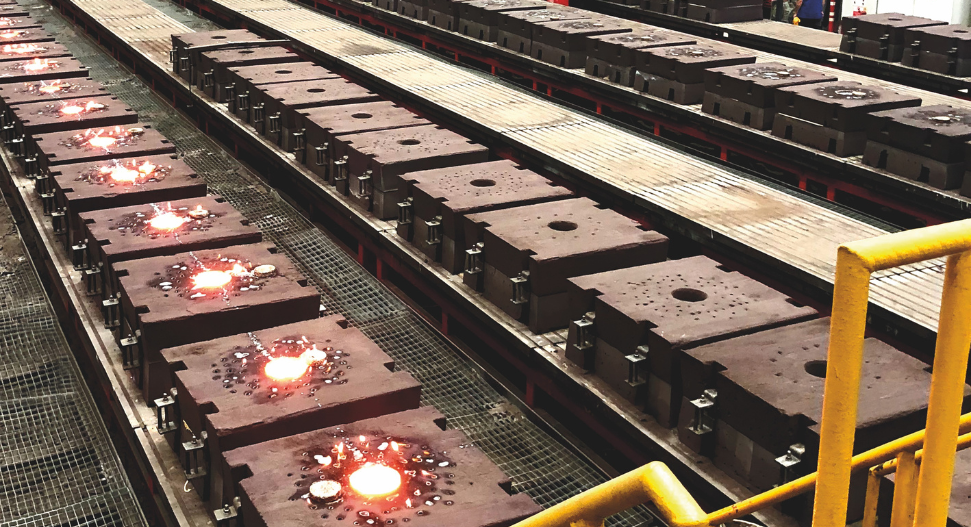
Selecting the right maintenance strategy for foundry operations requires balancing preventative planning with rapid machining and spare parts availability to reduce total lifecycle cost.
Reactive Maintenance in Foundries
Reactive maintenance addresses equipment after failure. While sometimes unavoidable, it often results in:
- Extended downtime
- Emergency machining costs
- Operational disruption
Preventative Maintenance for Foundry Equipment
Preventative maintenance is scheduled servicing based on time or usage. However, preventative systems only succeed when worn components identified during inspections can be remachined immediately.
Predictive Maintenance & Condition Monitoring
Predictive systems identify wear before failure occurs. But detection alone is insufficient. Engineering execution — including precision machining and component restoration — determines whether predictive insights translate into reduced downtime.
Common Wear & Failure Points in Foundry Equipment
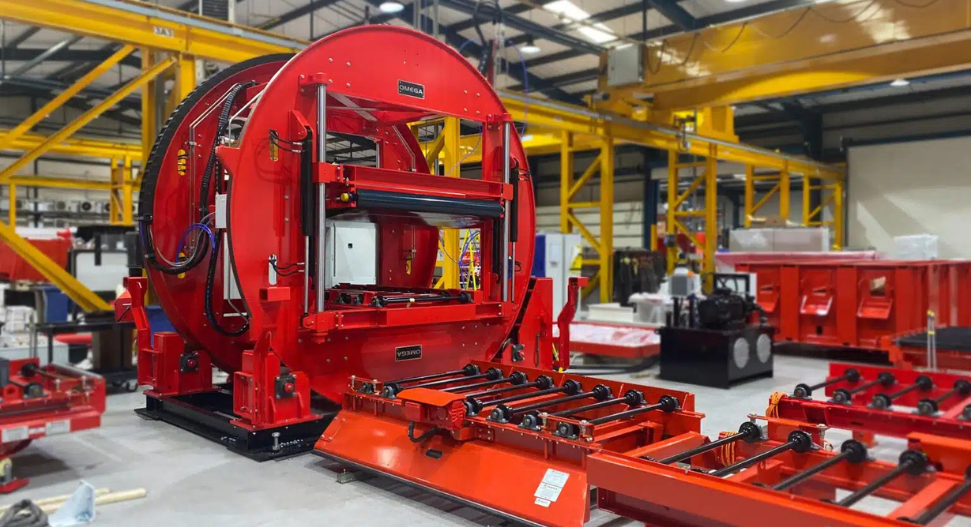
Foundry equipment operates in abrasive and high-heat conditions that accelerate wear on rotating assemblies, furnace components, drive systems, and moulding equipment. Effective sand casting machine repair strategies must prioritise these predictable wear zones to prevent production disruption.
The following areas consistently present risk:
- Abrasive sand erosion
Continuous sand exposure accelerates surface wear on moulding plates, liners, and chutes. Remachining restores surface integrity and extends lifespan. - Heat-induced distortion
Furnace assemblies experience dimensional drift under extreme temperatures. Precision machining restores flatness and alignment. - Shaft and bearing housing wear
Misalignment and load stress degrade journals and housings. Controlled remachining prevents premature bearing failure. - Fatigue cracking in high-load assemblies
Cyclic stress creates structural weaknesses. Engineering-led repair and reinforcement prevent catastrophic failure. - Gear and drive system degradation
Tooth wear and misalignment compromise power transmission. Remachining restores engagement accuracy.
By structuring inspections around these predictable degradation areas, foundries can proactively schedule foundry equipment repair or component replacement.
When Maintenance Identifies Damage: Repair, Remachine, or Replace?
When inspections reveal wear or damage, foundries must decide whether to repair, remachine, remanufacture, or replace components, balancing downtime cost against lead time and durability.
Replacement is often perceived as the safest option. However, in practice, replacement may introduce:
- Extended part lead times
- Freight delays
- Downtime impact
- Obsolete components
- Opportunity for material upgrades
For foundries operating Omega Sinto machinery, Leussink’s stocked spare parts offer an immediate replacement pathway for many components. However, when parts are not readily available or require modification, precision remachining or remanufacturing provides a faster, often more durable alternative to foundry machine repair.
Engineering evaluation should consider:
- Remaining service life of adjacent components
- Opportunity to upgrade materials for improved wear resistance
- Tolerance restoration vs full assembly replacement
- Downtime impact
Strategic remanufacturing of worn foundry equipment can extend asset life while improving reliability beyond original specification.
How to Plan Engineering-Led Foundry Shutdown & Turnaround Support
A planned foundry shutdown provides the most cost-effective opportunity to inspect, remachine, and replace high-wear components before they cause unplanned downtime.
A structured shutdown plan includes:
- Pre-shutdown inspection audits
- Critical component tolerance checks
- Spare part readiness
- Machining backlog scheduling
- Fabrication resource allocation
- Restart verification procedures
Engineering-led foundry plant shutdown maintenance strengthens long-term reliability and reduces restart risk. Schedule your shutdown during quieter periods to minimise the impact on productivity.
Emergency Foundry Repair in Australia
Even comprehensive maintenance strategies must account for unexpected failure, requiring immediate access to emergency repairs and industrial breakdown machining to restore critical foundry equipment without extended downtime.
An effective strategy includes access to:
- Rapid breakdown machining
- In-house precision engineering
- Immediate remanufacturing capability
- Local Australian support
For Australian foundries, local access to both spare parts and precision machining eliminates the potential for extended international delays.
Why Australian Foundries Partner with Leussink
Planning effective foundry maintenance machining is only one part of operational reliability. The real advantage comes from partnering with an engineering team that understands the demands of abrasive, high-heat foundry environments and can respond with precision, speed, and long-term support.
Leussink supports Australian foundries with an integrated offering that combines:
- Precision machining capability
- Fabrication and structural repair
- Reverse engineering expertise
- Stocked spare parts for Omega Sinto foundry machinery
- Ongoing technical support and training
This end-to-end capability, combined with our 40+ years of engineering expertise, ensures maintenance strategies translate into measurable performance improvements. Call our team on 02 4260 7777 to discuss your foundry equipment repair or maintenance needs.
How Does Precision Machining Support Preventative Maintenance?
How Long Does Emergency Machining Take?
Can Worn Foundry Equipment Be Remachined Instead of Replaced?
Is Remanufacturing More Cost-Effective than Replacement?
Other News
Small Parts Machining: Why Leussink Takes On the Small Jobs Too
Written by Stuart Ward, Sales and Marketing Manager at Leussink...
Written by Stuart Ward,...
Leussink Joins Omega Sinto Foundry Machinery at AFI 2026
Leussink will be at AFI 2026, the Australian Foundry Institute's...
Leussink will be at...
In-House vs Outsourced CNC Machining
In-House vs Outsourced CNC Machining: How to Make the Right...
In-House vs Outsourced CNC...
Casting CNC Machining
Why Casting CNC Machining Is Essential for Australian Foundries Precision...
Why Casting CNC Machining...
Why End-to-End Engineering Wins for Industrial Facilities
End-to-end engineering means working with one engineering partner across every...
End-to-end engineering means working...
CNC Machining vs Manual Machining for Heavy Industry: When Each Method Wins
Quick Answer: CNC machining vs manual machining is a project-by-project...
Quick Answer: CNC machining...
Emergency CNC Machining: What Actually Happens When Critical Equipment Fails?
It’s 2am. A bearing on the main drive has failed,...
It’s 2am. A bearing...
7 Australian Foundry Production Problems (And How Engineering Support Solves Them)
Most Australian foundries don't lose performance overnight. They lose it...
Most Australian foundries don't...
What Makes CNC Machining Essential for Heavy Industry Applications in Australia?
When a critical component fails in a mining operation or...
When a critical component...
How Does Large-Scale CNC Machining Handle Complex Component Production?
Large-scale CNC machining is not simply conventional CNC applied to...
Large-scale CNC machining is...